Buying second hand furniture is one of the smartest ways to furnish your home while saving money and supporting sustainable living. However, knowing how to identify high quality used furniture is essential to ensure you’re investing in pieces that are durable, functional, and worth the price.
High quality used furniture refers to pre-owned furniture that remains structurally sound, safe to use, and aesthetically appealing despite previous ownership. Rather than focusing only on appearance, experienced buyers examine the materials, craftsmanship, structural integrity, hardware, and overall condition before making a purchase.
In Singapore, where many homeowners, renters, and businesses seek affordable furniture for HDB flats, condominiums, offices, and commercial spaces, understanding how to evaluate used furniture helps you avoid costly mistakes while finding exceptional value.
Whether you’re shopping for a sofa, dining table, wardrobe, display cabinet, or bedframe, this guide explains everything you need to know before buying.
Why Quality Matters When Buying Used Furniture
A beautiful piece of furniture isn’t always a good investment. While some used furniture may look attractive at first glance, hidden structural issues can reduce its lifespan and increase repair costs.
Choosing high quality used furniture offers several advantages:
- Better long-term durability
- Greater value for money
- Reduced environmental impact
- Less furniture waste
- Higher resale value
- Improved safety and stability
Instead of replacing inexpensive furniture every few years, investing in well-built second hand furniture often provides better performance over time.
Pro Tip : Prioritize structural quality over cosmetic perfection. Minor scratches are usually easy to repair, while loose joints or damaged frames can be expensive to fix.
Start by Checking the Material
The material used in furniture significantly affects its durability and longevity.
Solid Wood
Solid wood furniture is generally considered the highest quality because it can last for decades with proper care.
Examples include:
- Oak
- Teak
- Walnut
- Maple
- Mahogany
Advantages:
- Extremely durable
- Easy to restore
- Timeless appearance
Engineered Wood
Furniture made from plywood or MDF can also provide excellent value when manufactured properly.
Inspect carefully for:
- Water damage
- Swelling
- Delamination
- Peeling edges
Metal Frames
Metal furniture should be:
- Rust-free
- Straight
- Welded securely
- Free from dents
Material Comparison
| Material | Durability | Best For |
|---|---|---|
| Solid Wood | Excellent | Long-term investment |
| Plywood | Very Good | Everyday furniture |
| MDF | Moderate | Light indoor use |
| Metal | Excellent | Office and industrial furniture |
Pro Tip : Furniture made from solid wood often becomes more valuable over time, especially if properly maintained.
Inspect the Overall Structure
One of the most important steps in identifying high quality used furniture is checking its structural integrity.
Perform these simple tests:
Stability Test
Gently shake the furniture.
A quality piece should:
- Feel solid
- Remain level
- Produce minimal movement
Joint Inspection
Look closely at:
- Corner joints
- Screws
- Dowels
- Welds
- Nails
Avoid furniture with:
- Loose connections
- Missing hardware
- Visible cracks
Drawer Test
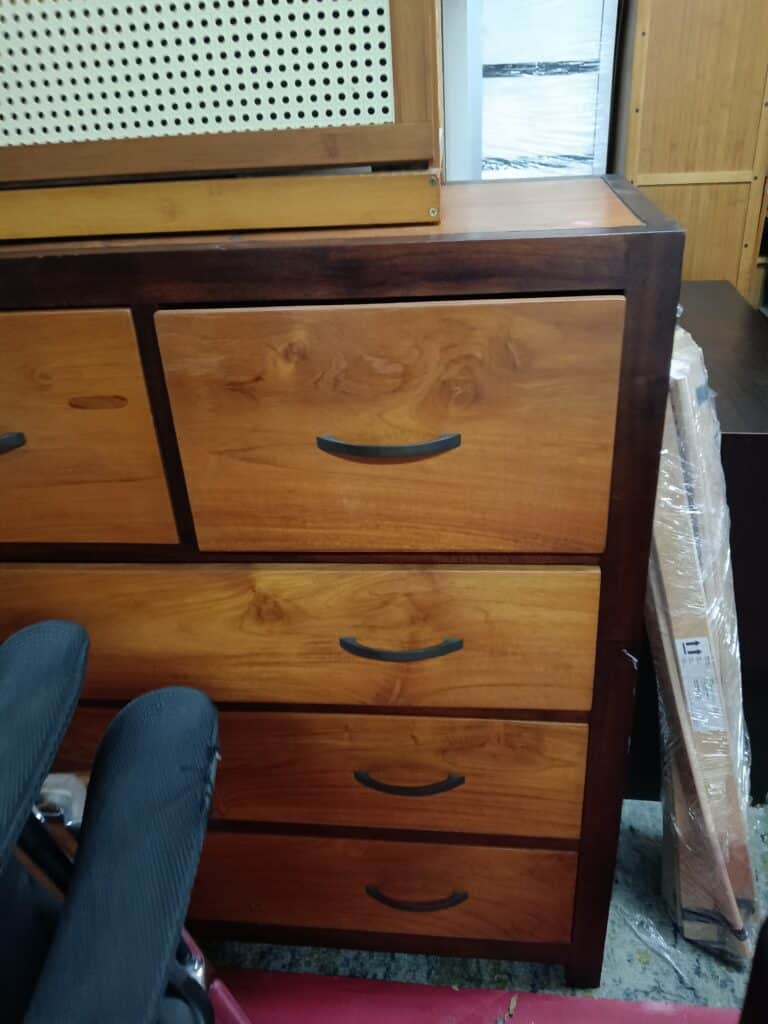
Open every drawer.
Check that it:
- Slides smoothly
- Closes properly
- Doesn’t stick
Door Test
Cabinet and wardrobe doors should:
- Open evenly
- Close completely
- Stay aligned
Pro Tip : Always inspect furniture from every angle—including underneath—to spot hidden damage.
Examine Surface Condition Carefully
Not all imperfections indicate poor quality.
Acceptable Wear
- Small scratches
- Minor dents
- Slight fading
- Light scuff marks
These are common signs of normal use and can often be repaired easily.
Warning Signs
Avoid furniture showing:
- Mold
- Water stains
- Deep cracks
- Wood rot
- Pest damage
- Severe warping
These issues may compromise the furniture’s structural integrity.
Surface Inspection Checklist
| Condition | Safe to Buy? |
|---|---|
| Minor scratches | ✅ Yes |
| Small paint chips | ✅ Yes |
| Loose handles | ✅ Usually |
| Water damage | ❌ No |
| Mold growth | ❌ No |
| Structural cracks | ❌ No |
Pro Tip : Cosmetic flaws are often inexpensive to repair, but structural damage usually isn’t.
Check Upholstered Furniture Carefully
When buying sofas, chairs, or upholstered benches, appearance alone isn’t enough.
Inspect:
- Cushion firmness
- Fabric condition
- Foam support
- Stitching
- Frame stability
Avoid:
- Strong odors
- Torn fabric
- Broken springs
- Sagging cushions
High quality upholstery should feel supportive and comfortable rather than overly soft or uneven.
Pro Tip : Sit on the furniture for several minutes to check comfort and identify hidden frame issues.
Look for Signs of Good Craftsmanship
Quality furniture is usually built with greater attention to detail.
Indicators include:
- Smooth edges
- Even finishes
- Consistent paint
- Strong joinery
- Quality hardware
Poor workmanship often results in:
- Uneven gaps
- Crooked doors
- Rough surfaces
- Loose fittings
Some well-crafted second hand furniture may also have collectible or historical value. If you’re interested in recognizing timeless pieces, read our guide on how to spot valuable antique furniture to learn the key characteristics that distinguish antique furniture from standard pre-owned items.
Why Buying from a Trusted Seller Makes a Difference
If you have questions about a specific piece of furniture or need expert advice before making a purchase, don’t hesitate to contact our team. We’re happy to help you evaluate your options and recommend high-quality second hand furniture that suits your needs, space, and budget.
Even experienced buyers benefit from purchasing furniture through reputable retailers.
Trusted second hand furniture stores typically:
- Inspect every item
- Clean and sanitize furniture
- Verify functionality
- Organize products by condition
- Offer knowledgeable customer support
This significantly reduces the risk of purchasing damaged or unsafe furniture.
According to the United Nations Environment Programme (UNEP), extending the lifespan of furniture through reuse and refurbishment supports a circular economy by reducing waste and conserving natural resources. In Singapore, this aligns with the goals of the Singapore Green Plan 2030, which encourages more sustainable consumption practices.
Choosing a reputable retailer not only provides peace of mind but also contributes to responsible and environmentally friendly purchasing decisions.
Pro Tip : Ask about the furniture’s condition, previous use, and any restoration work before completing your purchase.
Find Carefully Inspected High Quality Used Furniture at Second Chance Furniture Singapore
Knowing how to identify high quality used furniture gives you the confidence to make smarter purchasing decisions, but choosing a trusted retailer makes the process even easier. At Second Chance Furniture Singapore, we carefully inspect every piece of pre-loved furniture for structural integrity, functionality, and overall condition before it becomes available to our customers.
Our curated collection includes sofas, dining tables, display cabinets, wardrobes, bedframes, office furniture, and many other quality second hand pieces suitable for homes and businesses across Singapore. We believe that affordable furniture should never compromise on quality, durability, or style.
Whether you’re furnishing a new HDB flat, upgrading your office, or searching for a unique statement piece, our experienced team is here to help you find furniture you can rely on. Browse our latest collection today and experience how quality second hand furniture can provide exceptional value while supporting a more sustainable future.
FAQs (Frequently Ask Questions)
How old can used furniture be and still be considered high quality?
Age alone doesn’t determine quality. Many solid wood furniture pieces remain in excellent condition even after decades of use. Focus on structural integrity, material quality, and overall maintenance rather than the manufacturing date. Well-maintained older furniture is often more durable than newer, lower-quality alternatives.
Is solid wood always better than engineered wood?
Not necessarily. Solid wood generally offers greater longevity, but high-quality plywood furniture can also provide excellent strength and stability when properly constructed. Choose the material that best matches your budget, intended use, and maintenance preferences.
Can minor scratches affect furniture quality?
Usually not. Small scratches, paint chips, or surface wear are considered cosmetic issues and rarely affect the furniture’s functionality. Minor cosmetic imperfections can often be repaired easily, making them an opportunity to save money.
Should I avoid furniture that has been repaired?
Not always. Professionally repaired furniture can still offer excellent durability if the repairs were completed correctly using quality materials. Inspect repaired areas carefully to ensure they are sturdy and blend well with the original construction.
How can I tell if used furniture has hidden pest damage?
Look for tiny holes, sawdust-like residue, weakened wood, or hollow sounds when tapping the surface. These can be signs of termites or other pests. If you suspect pest damage, avoid the piece unless it has been professionally treated and fully restored.